

Questions:
- Do options ever become so expensive that it is no longer worthwhile to pay the high asking price to buy them? We may know that a news announcement is pending, but so do other investors —and they also want to buy options. Translation: Increased demand results in a significant increase in option prices and implied volatility.
- How can we determine whether a point has been reached such that we have a better opportunity to earn money by switching to negative-gamma (i.e., the opposite of our traditional) strategies?
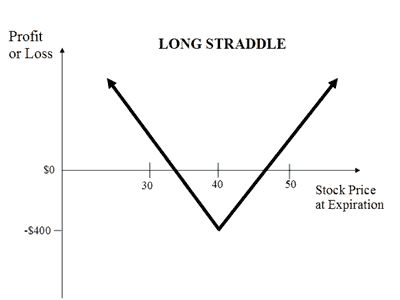
For this discussion, let’s consider premium-buying strategies are limited to market neutral strategies like buying long straddles and strangles, buying single options, and trading reverse iron condors where you buy the call and put spreads, paying a cash debit to own the position
Similarly, the premium-selling strategies are limited to market neutral strategies like selling straddles, strangles and single options. Also the traditional iron condor (sell both the call and put spreads and collect a cash credit).
Answers:
It should be intuitively obvious that there has to be some price at which it no longer pays to buy options to own positive positive gamma. [For an extreme example, I hope that you would never pay $8 for a pre-earnings, ATM straddle on a non-volatile, $20 stock.] Thus, as intelligent traders, we are limited and cannot adopt our favorite strategies every time there is an earnings announcement pending. Due diligence is required, and that includes analyzing a substantial amount of historical data so that we can estimate what may happen in the future by looking at what occurred in the past. Such data includes:
Previous post-news price gaps. We want to know the largest and smallest (based on a percentage of the stock price) and the median gaps when this specific stock announced earnings results. We do not need results from the last 20 years because stock markets change over time and more recent history is far more important. I suggest using 3 to 4 years of data (12 to 16 news announcements). Why is this information so important?
The data provides a good estimate of how much you can afford to pay for the options. There are two ways to profit.
First, exit the trade whenever there is a satisfactory profit before news is released.
When implied volatility increases by enough, your position increases in value and it may be attractive to unload the position and lock in the gains prior to the news release.
When the stock makes a big move prior to the news release, the positive-gamma position will be worth far more than you paid for it —and that may be a profit worth taking.
Second, when we do wait for the news release, the profitability of the trade depends on the size of the price gap and the cost of the options.
By looking at past data, we have a reasonable estimate for the size of any future price gap and thus, the value of our option position. Obviously this is just an estimate and the current trade may perform much better or much worse than the average. But, it is that average that dictates just how much we should pay for our option position. If the ATM straddle is worth $6 (on average) immediately after the market opens after the announcement, then we should not be willing to pay as much as $6 to buy the straddle.
The average implied volatility must be considered. If the IV averages 34 for the time slot (i.e., number of days in advance of news), in which we buy the options then we cannot expect to earn a profit when paying 40.
The cost (IV) of buying the pre-news options at a variety of times. It is important to discover a good time to buy the options (i.e., before IV has risen too far in anticipation of the pending news).
The price history for the stock, in the days leading up to the news release: How often did the stock rally/fall enough to generate a good profit without bothering to hold until the earnings news is released? If this never happens for a given stock, then the price that we can pay for a the straddle decreases because one of our profit opportunities is not present.
Results. How would various gamma-buying strategies have performed in the past? This requires examining option-pricing data as well as the stock price.
There is a lot of data that a trader may analyze.
The work produces guidelines for making trades, and we depend on those guidelines to tell us when to enter, and when to avoid, using our methods.
The second question is more difficult to answer because so much depends on the individual trader. For example, some traders will never sell straddles or strangles because risk is too high. Others understand how to manage risk for such trades (most important is choosing proper position size) and would adopt the negative-gamma strategies when the option prices are so high that it is reasonable to anticipate earning a profit by selling them.
Be careful. If you decide that paying $9 for a straddle (or paying a 34 implied volatility) is too high to buy the options that does not suggest that it is okay to sell. Selling requires a decent edge. For example, if your maximum bid for a straddle is $6 (reminder: the average post-news straddle is worth $9), I would not want to consider selling that same straddle unless I could collect $12 (or an IV of at least 40). Those numbers describe my personal guidelines and you must choose your own.
There is a lot of work to do before investing your money into option trades. Fortunately SteadyOptions does the tedious analysis and we can trade their suggestions. There is no guarantee of success. However, it is always good to trade with the probabilities on your side — and that is what you get with your SO membership.
Related articles:
Mark Wolfinger has been in the options business since 1977, when he began his career as a floor trader at the Chicago Board Options Exchange (CBOE). Since leaving the Exchange, Mark has been giving trading seminars as well as providing individual mentoring via telephone, email and his premium Options For Rookies blog. Mark has published four options trading books. His Options For Rookies book is a classic primer and a must read for every options trader. Mark holds a BS from Brooklyn College and a PhD in chemistry from Northwestern University.





There are no comments to display.
Join the conversation
You can post now and register later. If you have an account, sign in now to post with your account.
Note: Your post will require moderator approval before it will be visible.