
Leaderboard

Popular Content
Showing content with the highest reputation on 08/20/26 in all areas
-
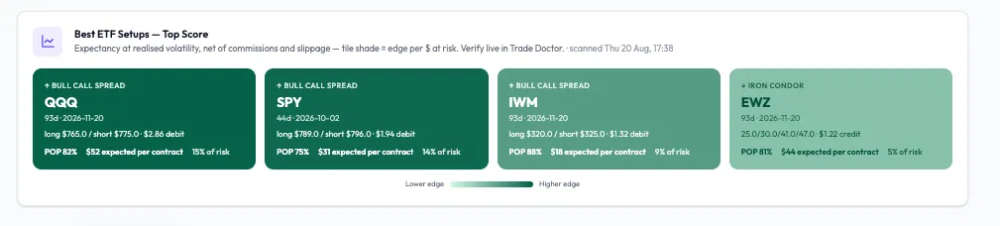
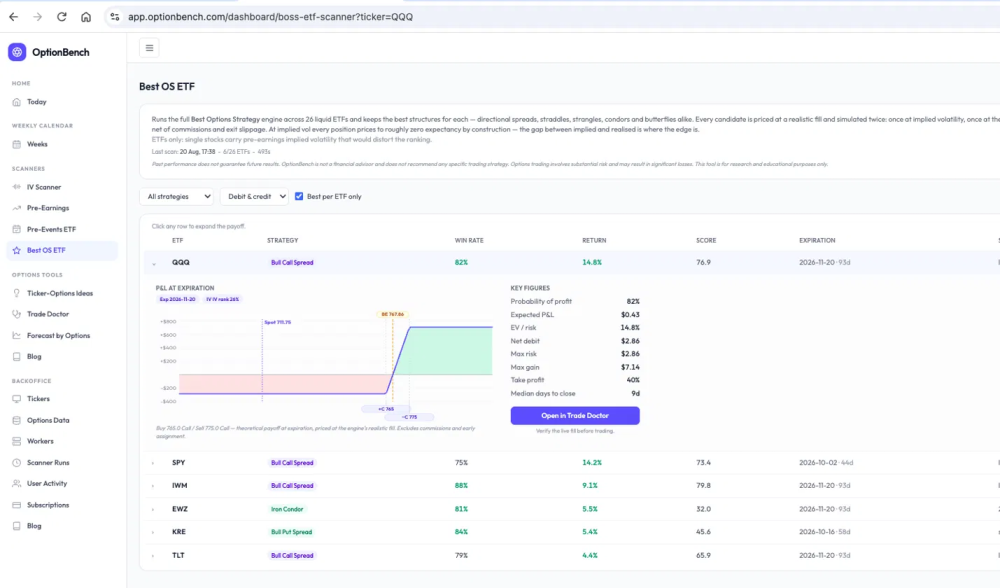
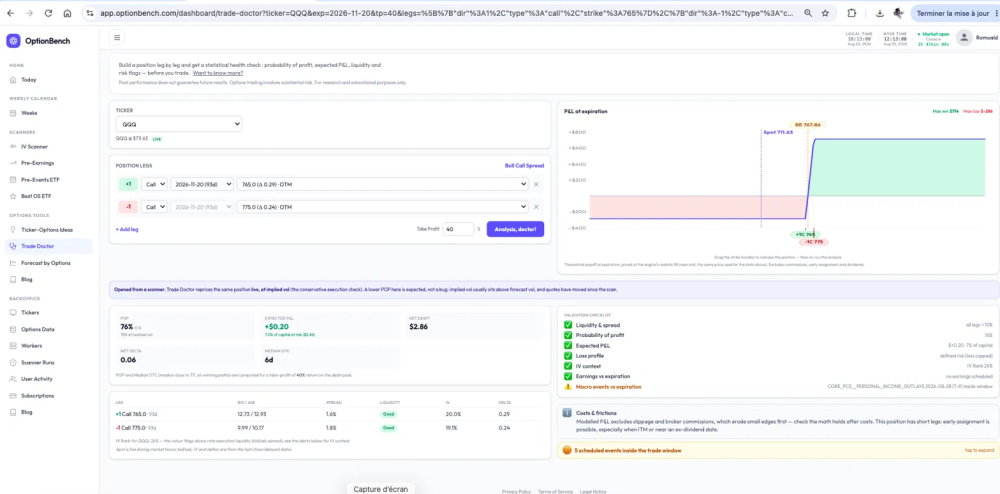
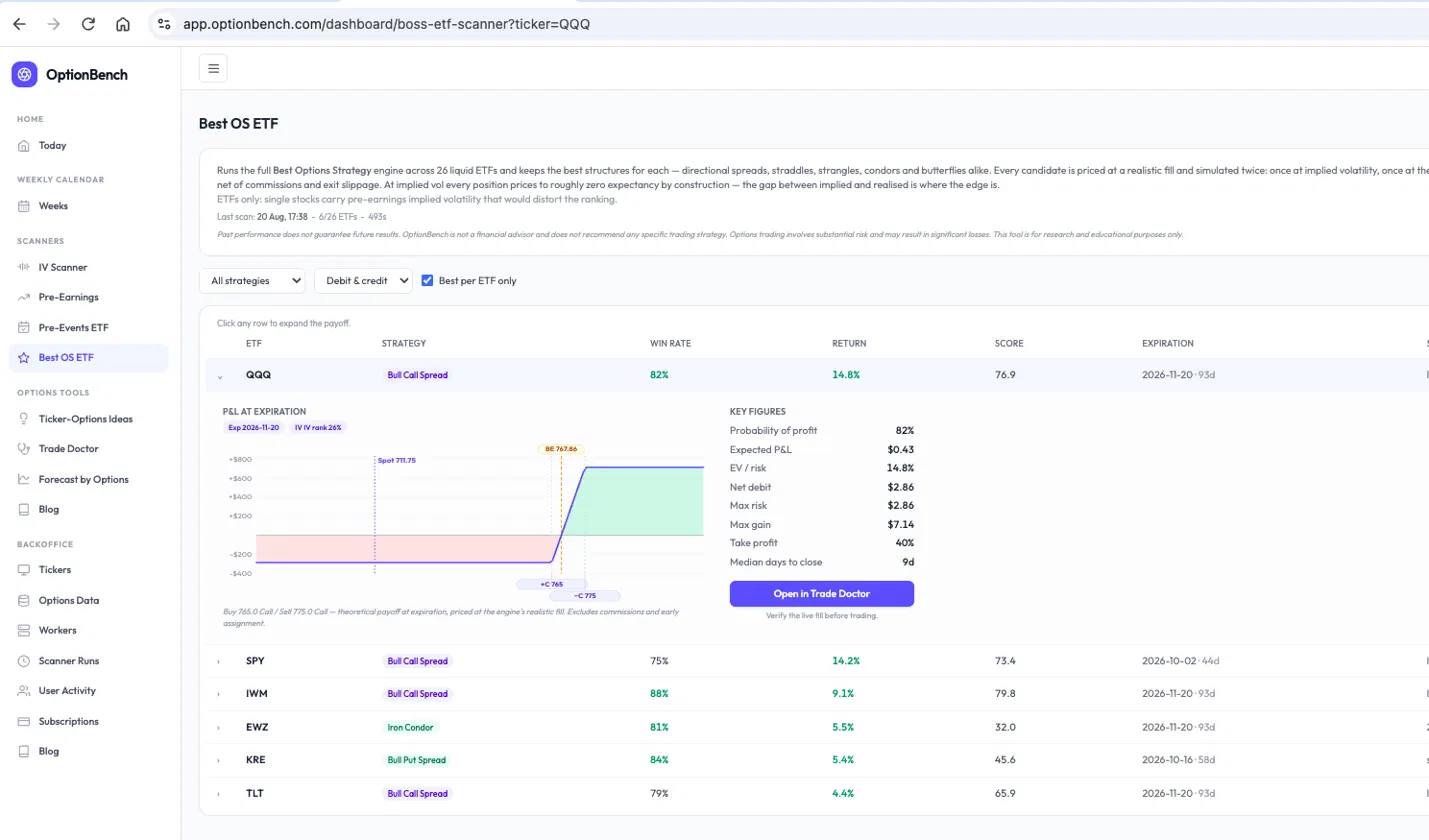
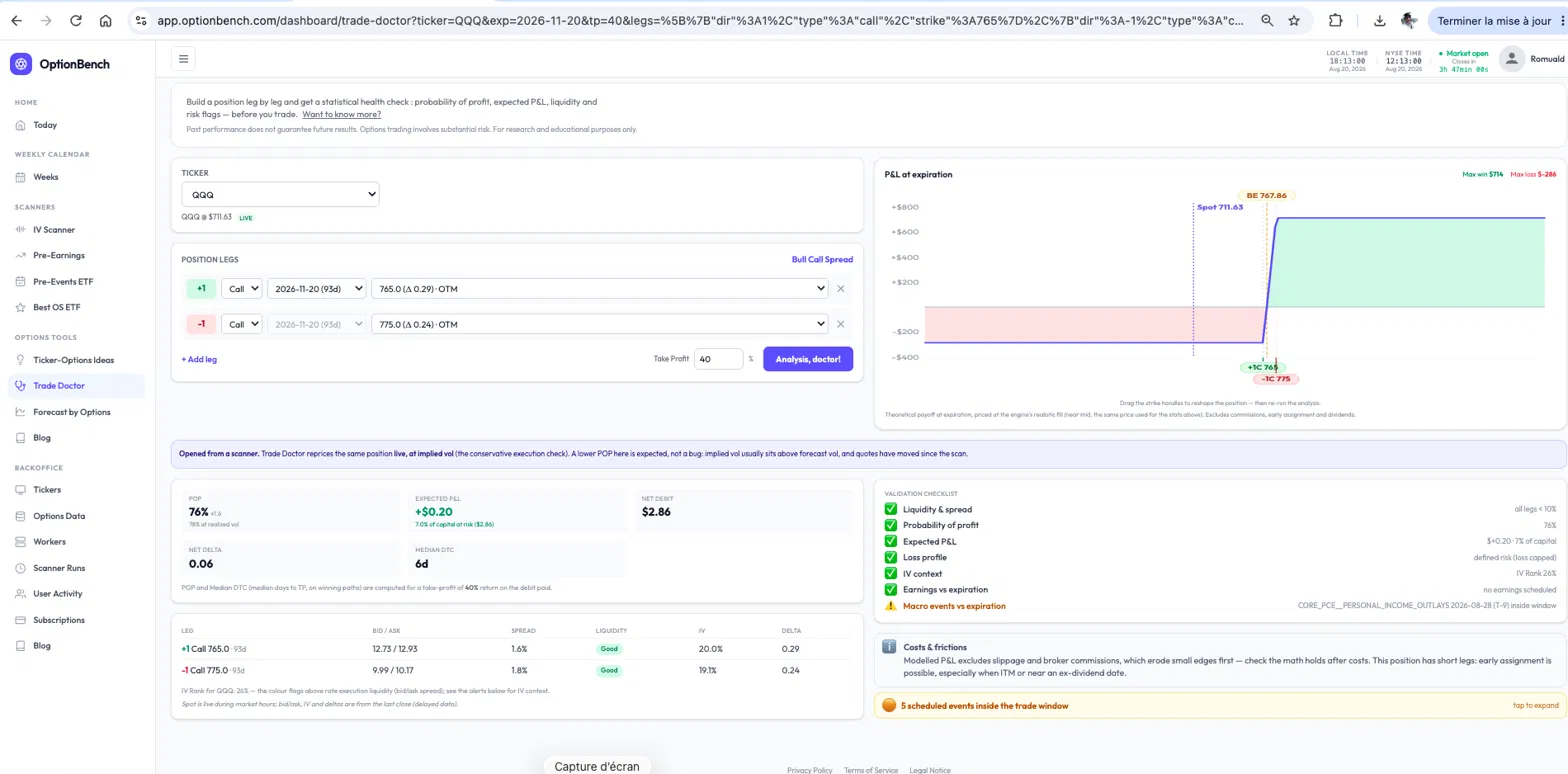
When two engines disagree, and why that's the reassuring case A worked example from today's scan — not a trade suggestion, a look at how the pieces fit together. The ETF engine surfaced a QQQ bull call spread, 765/775, November expiry, $2.86 debit. It reads 82% probability of profit, $0.43 expected P&L, 15% expected return on capital at risk. The interesting part is what happens next. Push the same position into Trade Doctor and the numbers change: 76% POP, +$0.20 expected. Lower on both counts. That looks like two tools contradicting each other. It isn't, and the difference is the whole point. The engine simulates at realised volatility. It asks what happens if the underlying behaves the way it has actually been behaving. Trade Doctor reprices live at implied volatility — what the market is charging for that risk today. Implied normally sits above realised; that gap is the volatility risk premium, and it's why the second reading is the more conservative of the two. So a lower POP in Trade Doctor is expected. What you're checking is not whether the numbers match — they shouldn't — but whether the position survives the harsher assumption. Here it does: expected P&L stays positive at implied vol, 7% of capital at risk. On a debit position that isn't automatic. Plenty of setups screen well on the engine and collapse to zero expectancy once you price them at implied. Two other things the cross-check surfaces that the card alone doesn't. Both legs quote inside a 2% bid/ask spread, so friction won't eat the edge — on a $2.86 debit that matters. And the validation checklist flags five macro prints inside the trade window, including Core PCE at T-9. Everything else runs green; that one doesn't. What I'd take from it. The engine tells you a structure looks good. Trade Doctor tells you whether it still looks good when the market's own pricing is the assumption. Agreement between them isn't confirmation that a trade will work — nothing is — but disagreement in the wrong direction is a reason to stop, and that's worth thirty seconds before committing capital. For the record, this one is a directional bull bet: break-even at 767.86 with QQQ at 711. Both tools are part of OptionBench — the scanners surface the structures, Trade Doctor is the execution check you run before committing. Free 7-day trial if you want to run this cross-check on your own tickers: optionbench.com
 1 point
This leaderboard is set to New York/GMT-04:00