

SteadyOptions is an options trading forum where you can find solutions from top options traders. Join Us!

We’ve all been there… researching options strategies and unable to find the answers we’re looking for. SteadyOptions has your solution.

How To Trade Risk Reversals


A risk reversal is a strategy that involves selling a put and buying a call with the same expiry month. This is also known as a bullish risk reversal. A bearish risk reversal would involve selling a call and buying a put. Today we’re going to examine the bullish risk reversal.

The following is a guest post by our good friend Gavin Mcmaster from OptionsTradingIq.


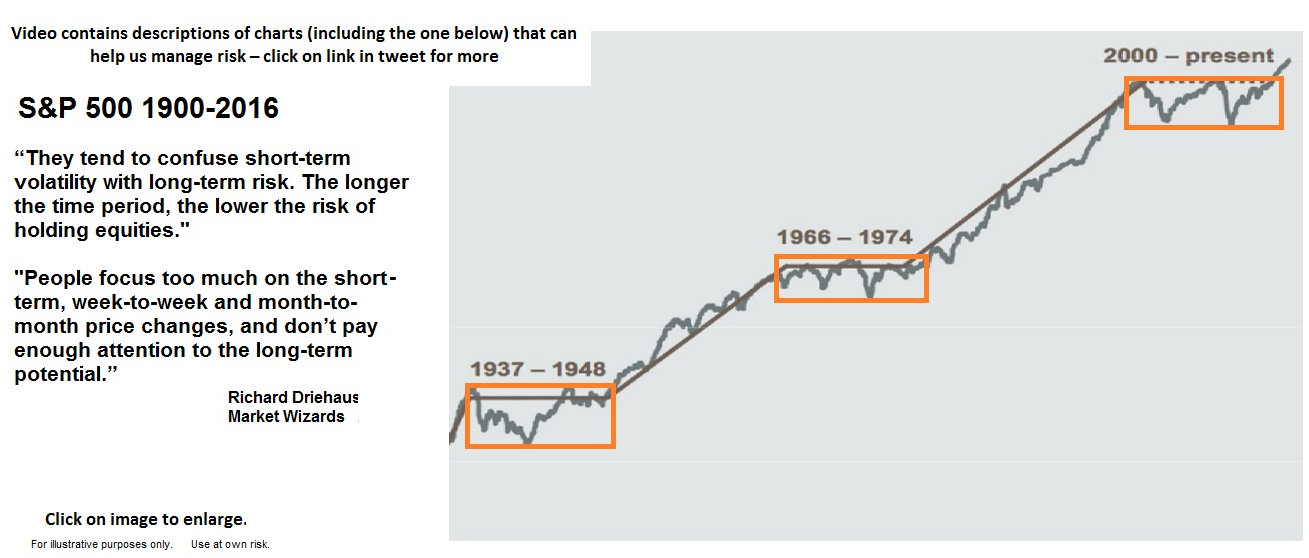
Recently I posted a chart on my blog, which is also shown below.
 

SPX Box.PNG

Image Credit: Chris Ciovacco


It’s hard to argue that this chart looks anything but bullish.


Stocks may be extended short-term and due for a pullback, but if a trader wanted to take a bullish position a risk reversal provides can be a good option.


BE PREPARED TO TAKE OWNERSHIP


The key with a bullish risk reversal is that you need to be prepared to buy the underling at the strike of the short put. If the underlying is below the strike price at expiry, the stock will be put to you.


The beauty of the risk reversal is that it takes advantage of the inherent skew in options. Generally, implied volatility is higher for puts than calls.


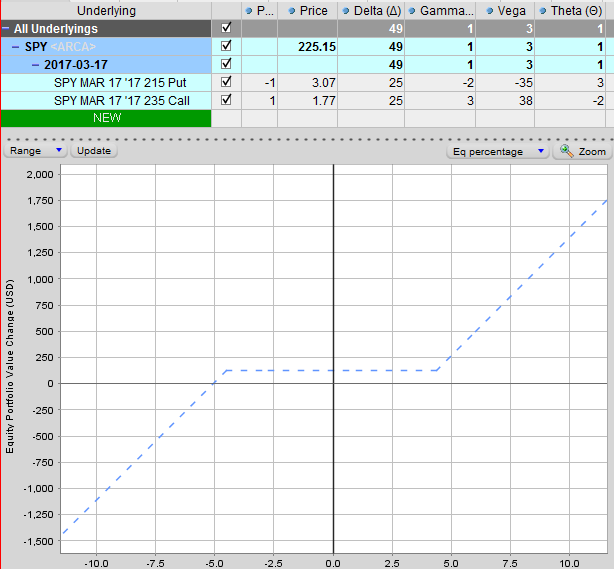
Assuming a trader is bullish and thinks the SPY will head higher by March, he could construct a trade that looks something like this:
 

Capture.PNG


Here the trader is choosing the 25 delta calls and puts, giving an overall exposure level of 49 delta. In the short-term, the position will perform similar to owning 49 shares of SPY. Of course, as the underlying changes, so two will the Greeks.


The beauty of the trade is that you can own upside exposure and get paid if the stock goes nowhere. If the stock falls, you end up taking ownership for a price less than when the risk reversal was initiated.


WHEN TO TRADE RISK REVERSALS


A great time to use risk reversals is when a stock has had a sharp selloff. During these times implied volatility for the puts can go through the roof as traders try to protect against further downside. High risk tolerant traders can even trade leveraged risk reversals in this case. Due to the high premium received for selling puts during market panics, the trader can buy 2, 3 or even 4 calls for a net cost of $0.


Just think how this strategy would have performed during recent selloffs.


These trades also work well if the trader is expecting a minor pullback but realizes it might not happen. If markets continue moving higher, he gets partial benefit and if stocks fall he takes ownership at a lower price.


What Is SteadyOptions?

12 Years CAGR of 114.5%

Full Trading Plan

Complete Portfolio Approach

Real-time trade sharing: entry, exit, and adjustments

Diversified Options Strategies

Exclusive Community Forum

Steady And Consistent Gains

High Quality Education

Risk Management, Portfolio Size

Performance based on real fills

Subscribe to SteadyOptions now and experience the full power of options trading!
Subscribe

Non-directional Options Strategies

10-15 trade Ideas Per Month

Targets 5-7% Monthly Net Return

Visit our Education Center

Recent Articles

Articles

  • Pre-Earnings Entry Price: What 31,000 Cycles Say

    Every card in the scanner carries a block called How expensive is this entry? It compares what you would pay today against what the same setup cost on the same ticker at the same point in past cycles. I built that block in August. It reads well. But a reading that looks sensible and a reading that predicts something are different things, and until last week I had only the first.


    By Romuald,

    • 0 comments
    • 72 views
  • How LEAPS Differ From Short-Term Options

    LEAPS stands for Long-Term Equity Anticipation Security. Which is just a long-dated option, typically referring to those with expirations more than a year out. There’s no technical difference between LEAPS and shorter-term options other than the expiration date. They’re traded on the same exchanges and have the same rules surrounding margin and whatnot.

    By Pat Crawley,

    • 0 comments
    • 30561 views
  • Expensive Compared to What?

    A trader looks at a pre-earnings straddle and asks whether it is expensive. It is the right instinct and the wrong question, because the word carries no meaning on its own. Expensive against what? A $12 straddle on a $200 stock is not expensive or cheap. It is $12.

    By Romuald,

    • 0 comments
    • 267 views
  • Beyond Strategies: What Options Traders Should Know

    Options education almost always begins with structures. Traders learn vertical spreads, calendars, butterflies, condors, covered calls and straddles, study the expiration diagrams, work out maximum profit and loss, and build a sense of the conditions each structure is supposed to suit. That foundation is necessary and there is no way around it.

    By Kim,

    • 0 comments
    • 594 views
  • SPX vs SPY Options: Which One Should You Trade? (2026 Guide)

    Both SPX and SPY options give you exposure to the S&P 500. They track the same 500 stocks, move nearly tick-for-tick, and offer the same core strategies — credit spreads, iron condors, butterflies, and 0DTE trades. Yet the two products settle differently, are taxed differently, and carry very different assignment risks.

    By krisbee,

    • 0 comments
    • 4294 views
  • Strike Price Effects Or Pinning Revisted

    Loyal readers of this blog will recall my post from 2019 “Pinning Down the ‘Option Pinning’”. If you have not heard of pinning have a look at that article as – spoiler – everything in it as well as Jeff Augen’s observations in his books which are referenced is still valid.

    By TrustyJules,

    • 0 comments
    • 1948 views
  • Could This Strategy Be The Holy Grail Of Investing?

    This is a reprint of my Seeking Alpha article from 2013. If you have SA subscription, you can read the full article including hundreds of comments here. For the record, the strategy implementation has changed since then, but the principle remains the same. You can read more here

    By Kim,

    • 6 comments
    • 5374 views
  • Why Traders Need Brokers: An Important Alliance

    Trading the financial markets can be rewarding, but it also offers its fair share of complexities and obstacles. When faced with thousands of financial instruments, fluctuating markets, and a range of platforms at their disposal, traders can feel overwhelmed.

    By Kim,

    • 0 comments
    • 2101 views
  • 8 Tips to Help New Investors Build Up Their Wealth and Manage Risks

    Investing your money is arguably the most effective way to build wealth, but it’s not some magic get-rich-quick scheme. It comes with risk. If you jump into investing, especially if you’re considering investing in cryptocurrency and treat it like gambling, the chances are that you’ll see the same results as gambling.

    By Kim,

    • 0 comments
    • 1516 views
  • No Really, It Will Be Different This Time Around!

    Whilst the Palantir CEO is carping on about the fact that the iPhone is the crowning achievement of civilization and nothing has changed our lives more, us investors are left wondering if all the money that is going into the future grand vista of Big Tech really is the proverbial land of milk and honey.

    By TrustyJules,

    • 0 comments
    • 3097 views

  Report Article


We want to hear from you!


There are no comments to display.


Join the conversation

You can post now and register later. If you have an account, sign in now to post with your account.
Note: Your post will require moderator approval before it will be visible.

Guest
Add a comment...

×   Pasted as rich text.   Paste as plain text instead

  Only 75 emoji are allowed.

×   Your link has been automatically embedded.   Display as a link instead

×   Your previous content has been restored.   Clear editor

×   You cannot paste images directly. Upload or insert images from URL.

Loading...