
Leaderboard



Popular Content
Showing content with the highest reputation since 09/02/26 in Posts
-
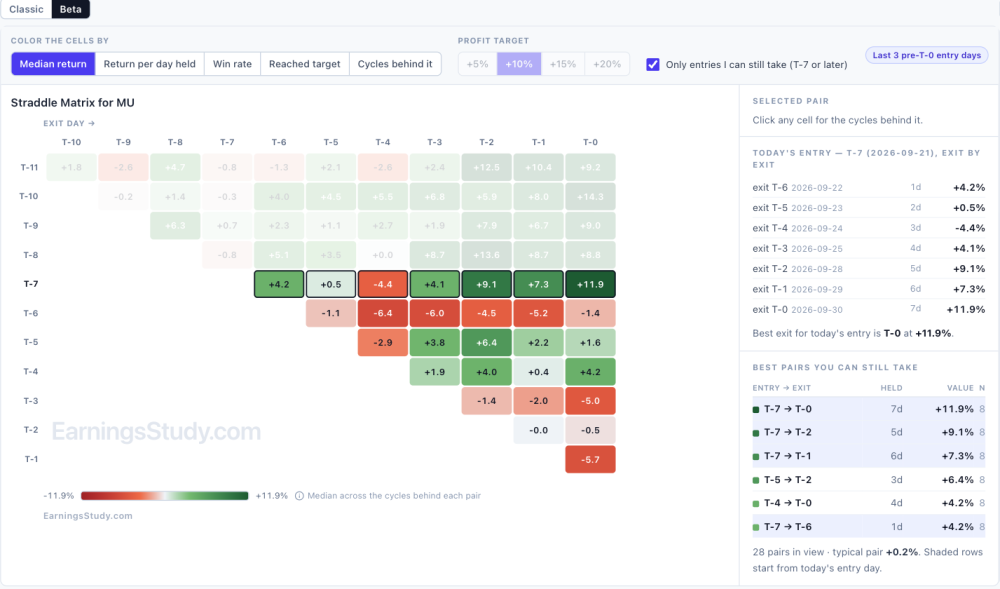
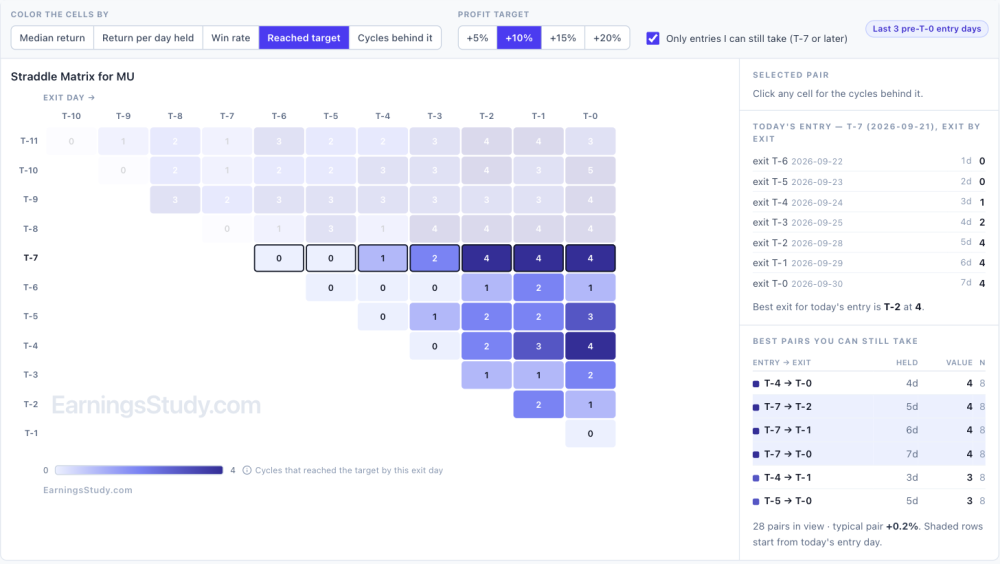
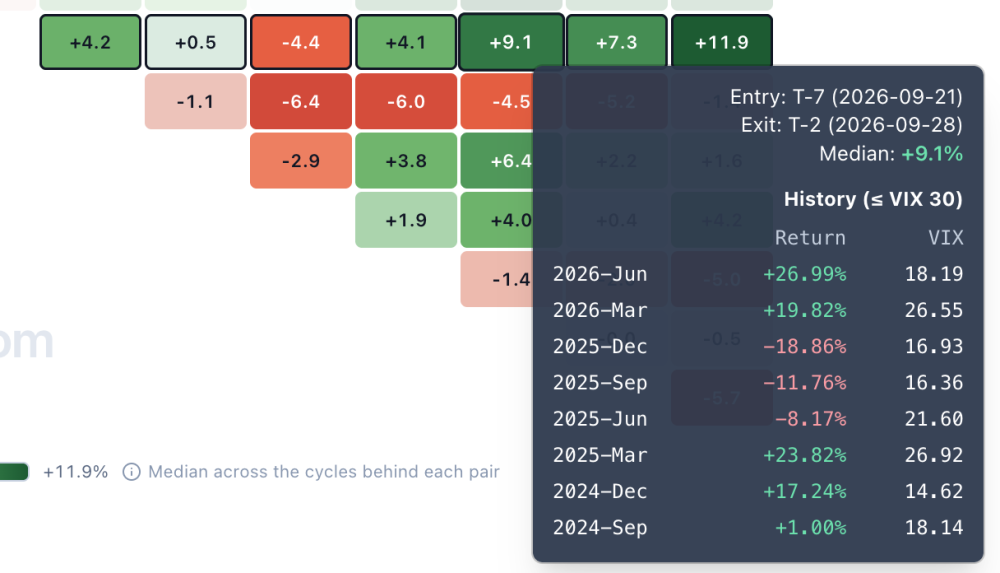
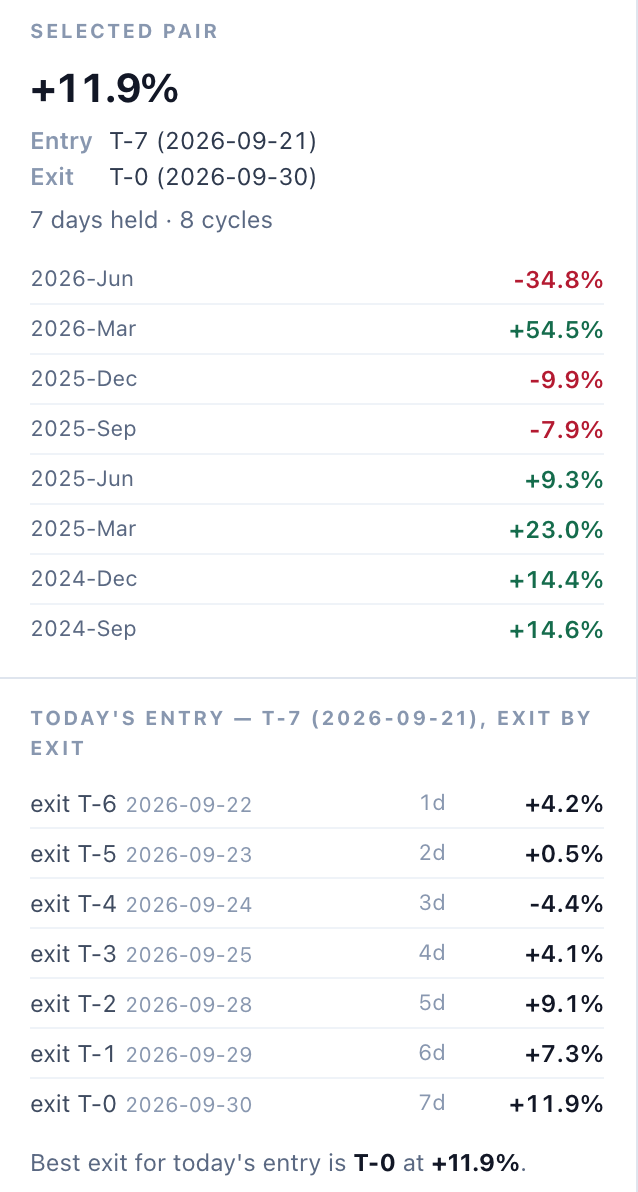
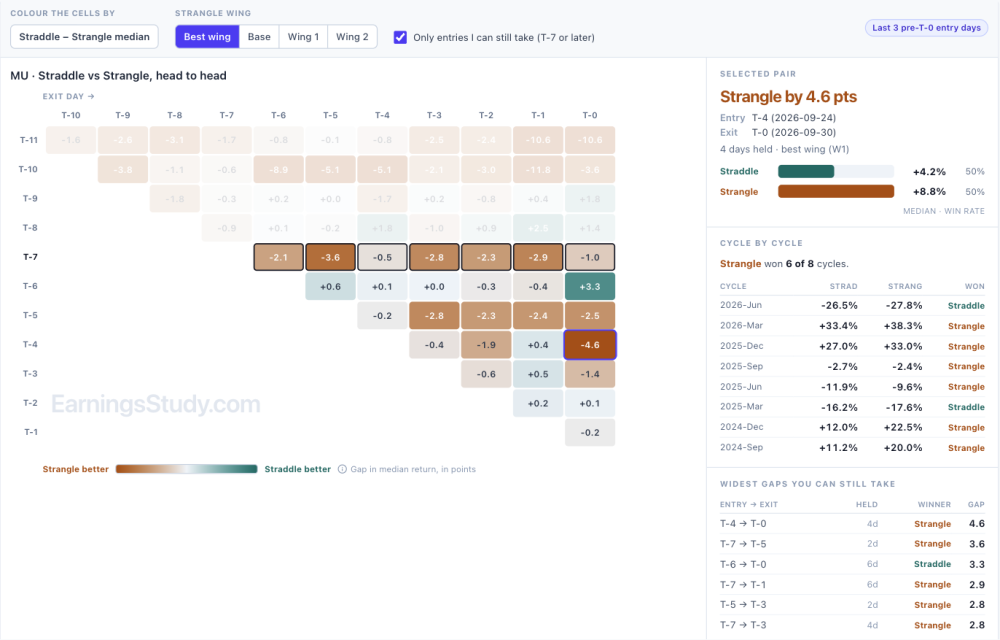
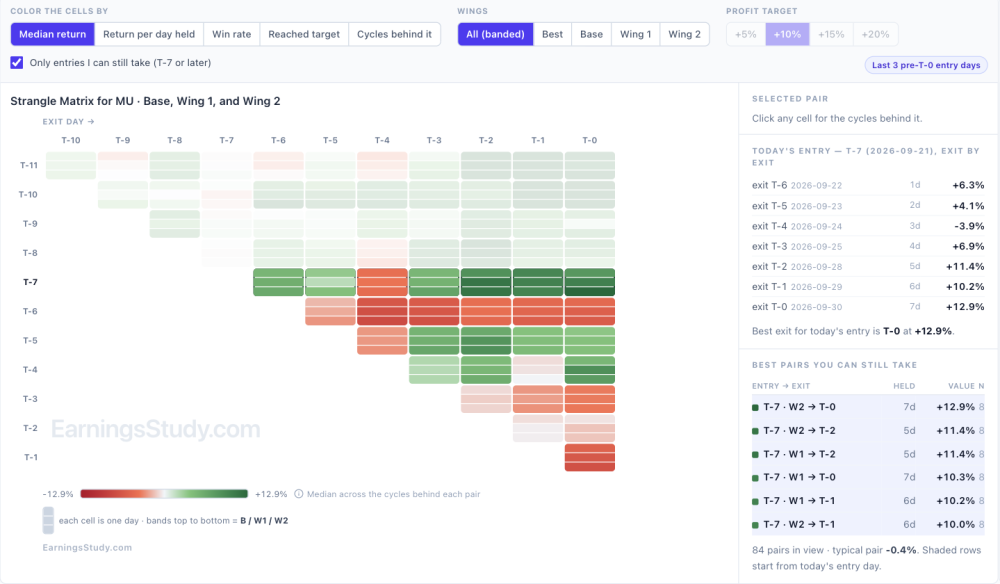
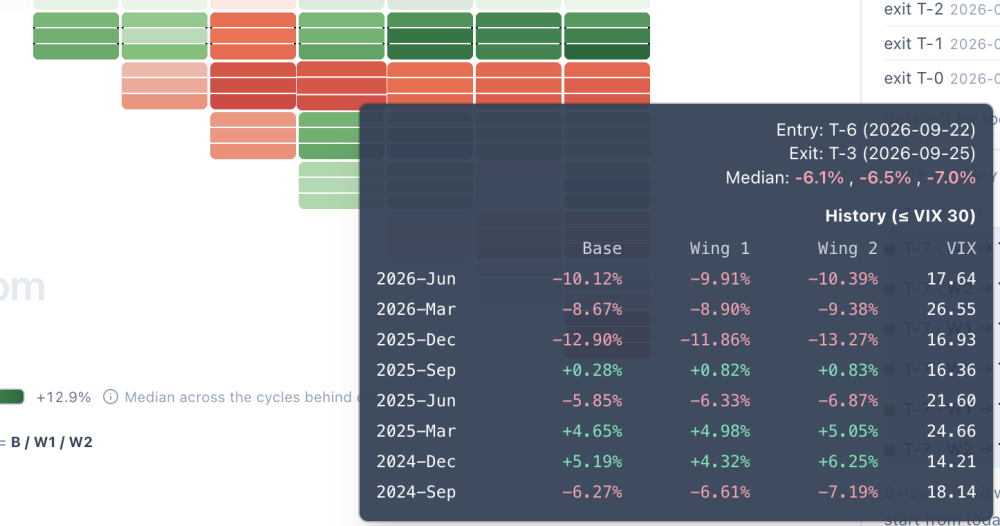
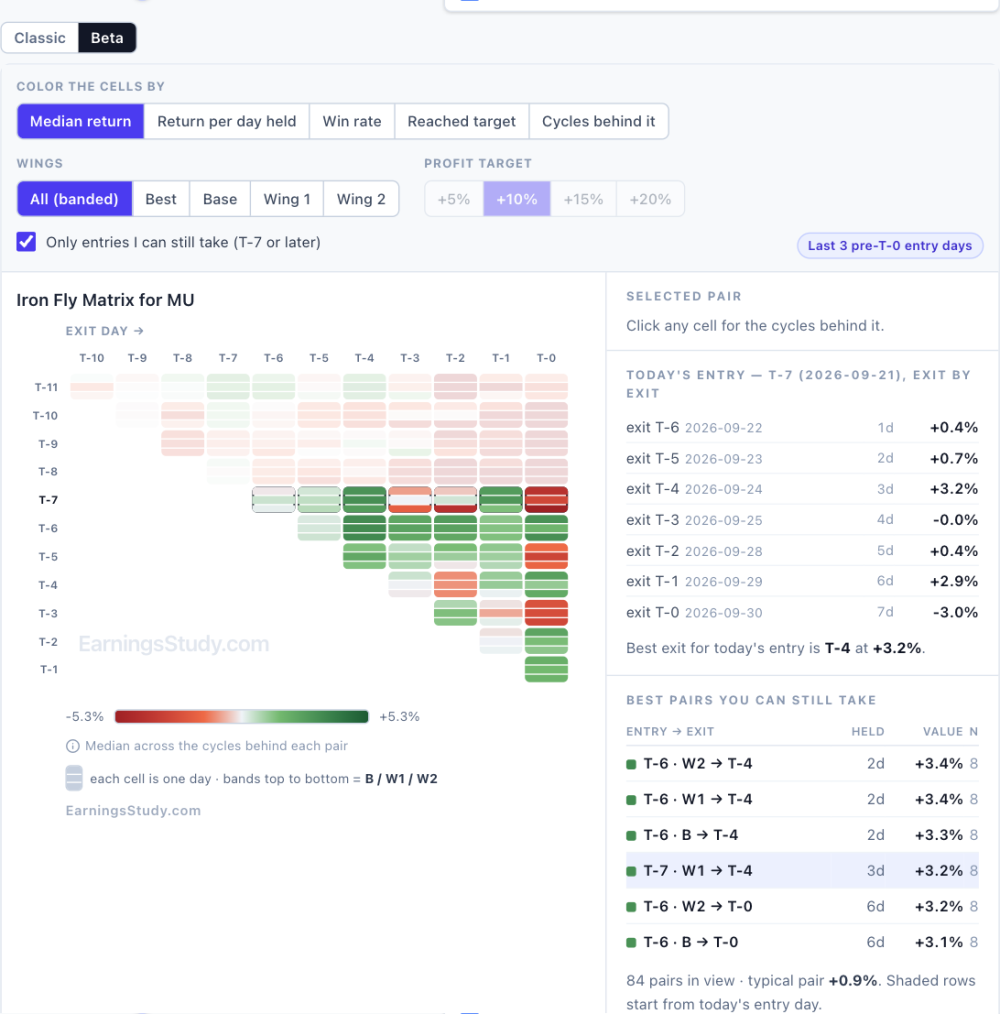
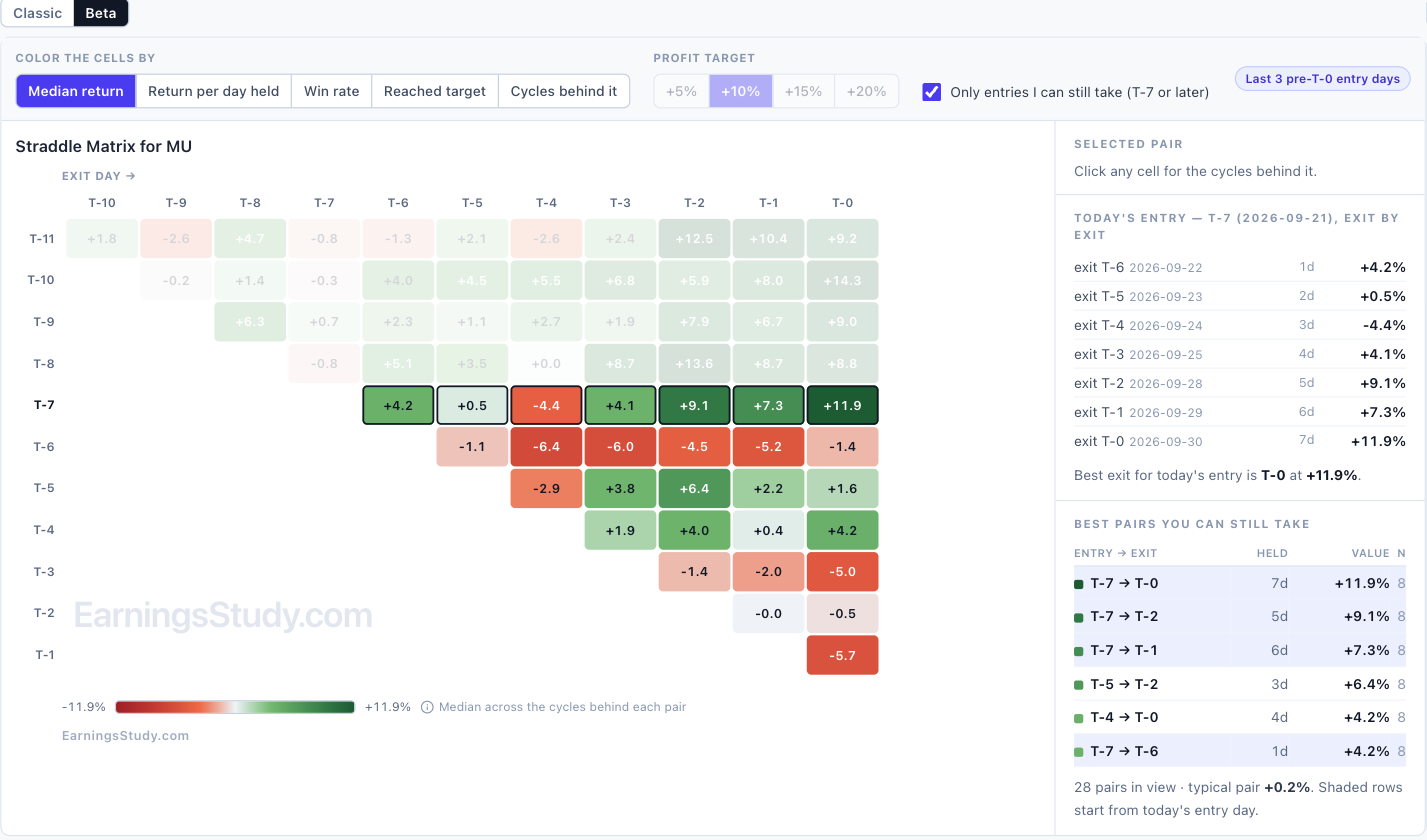
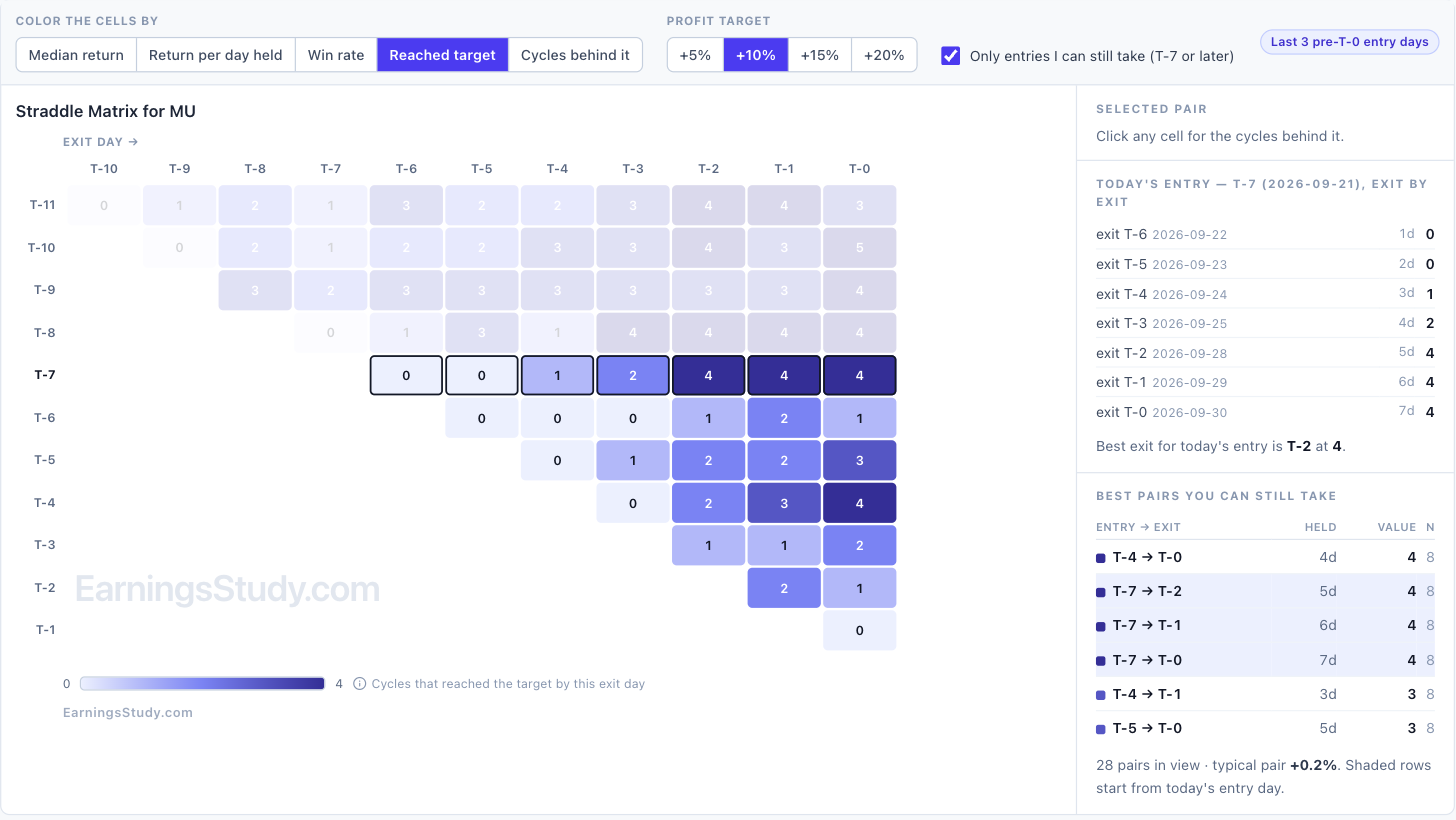
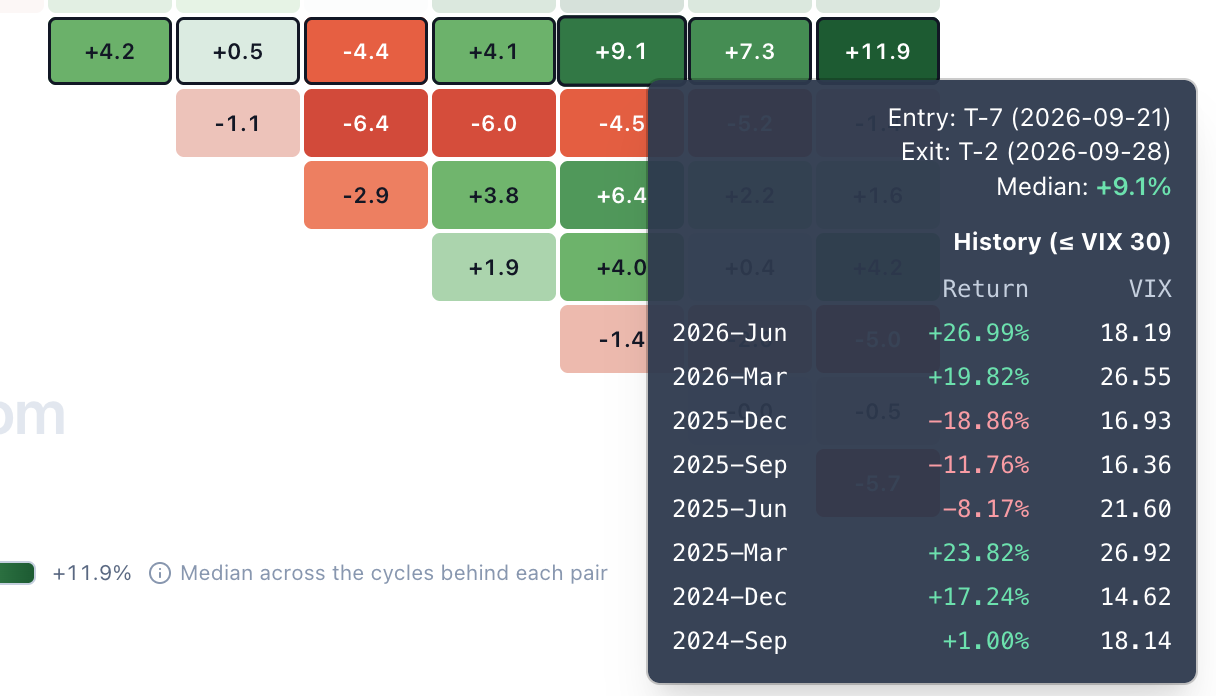
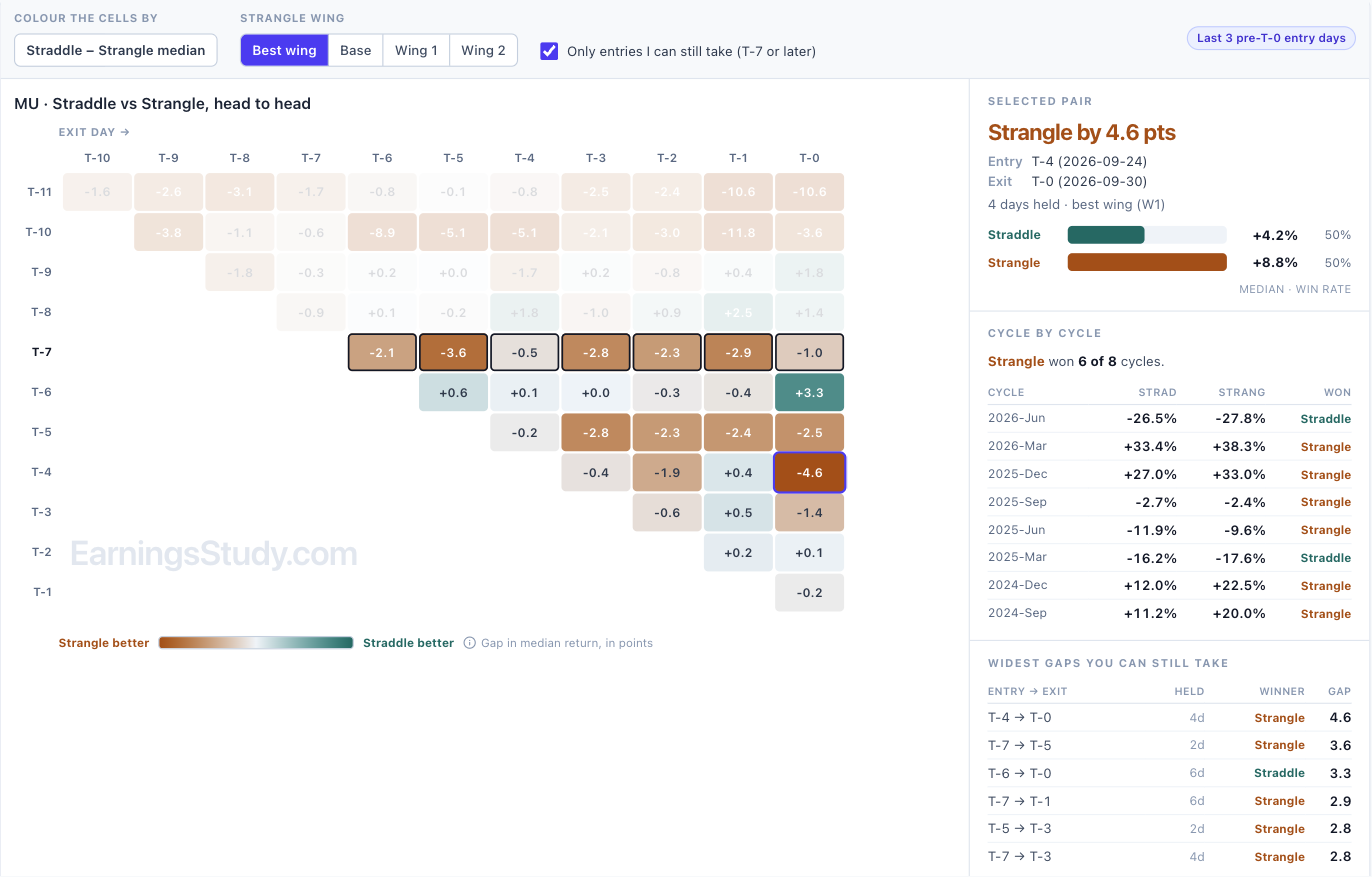
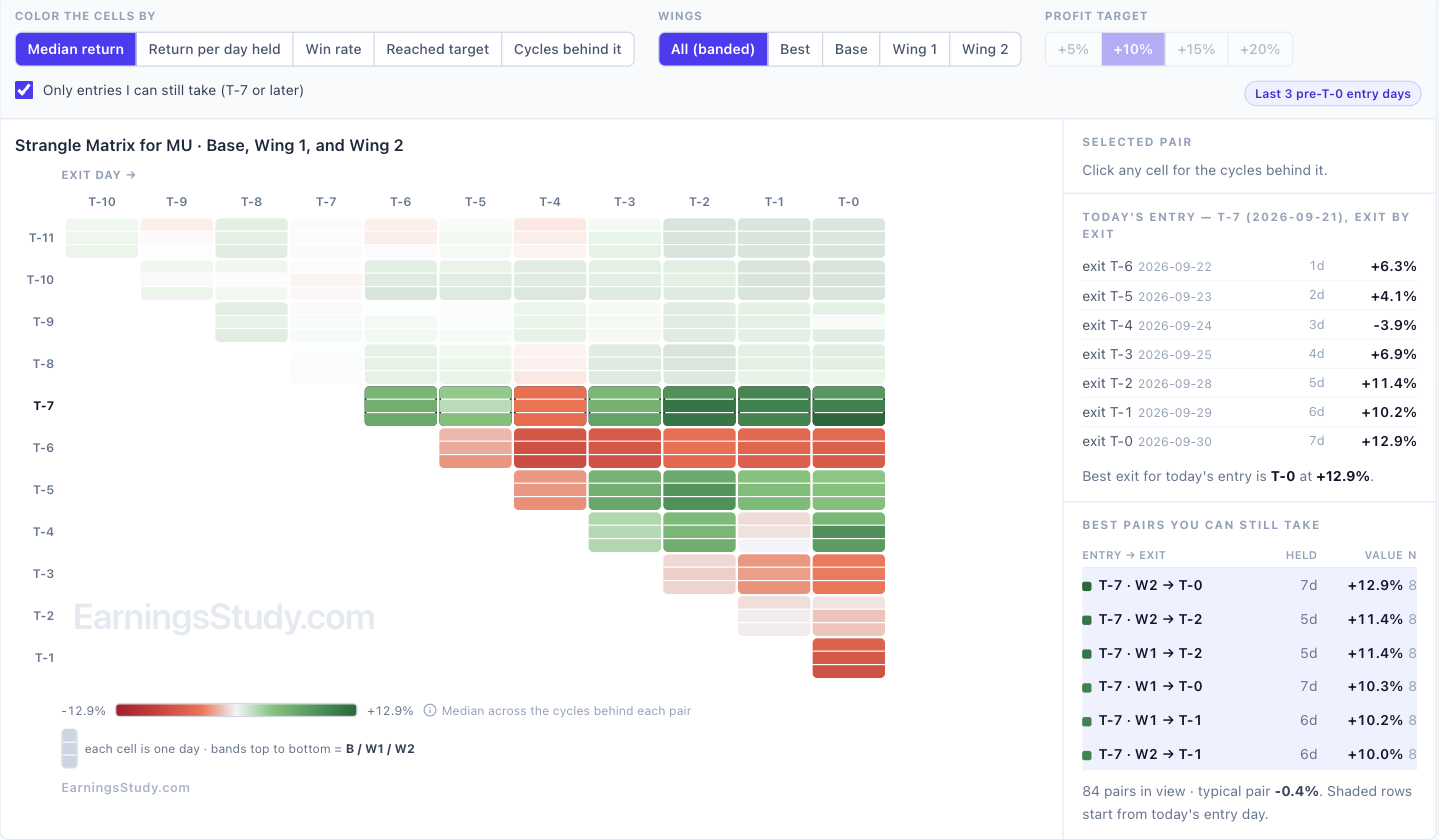
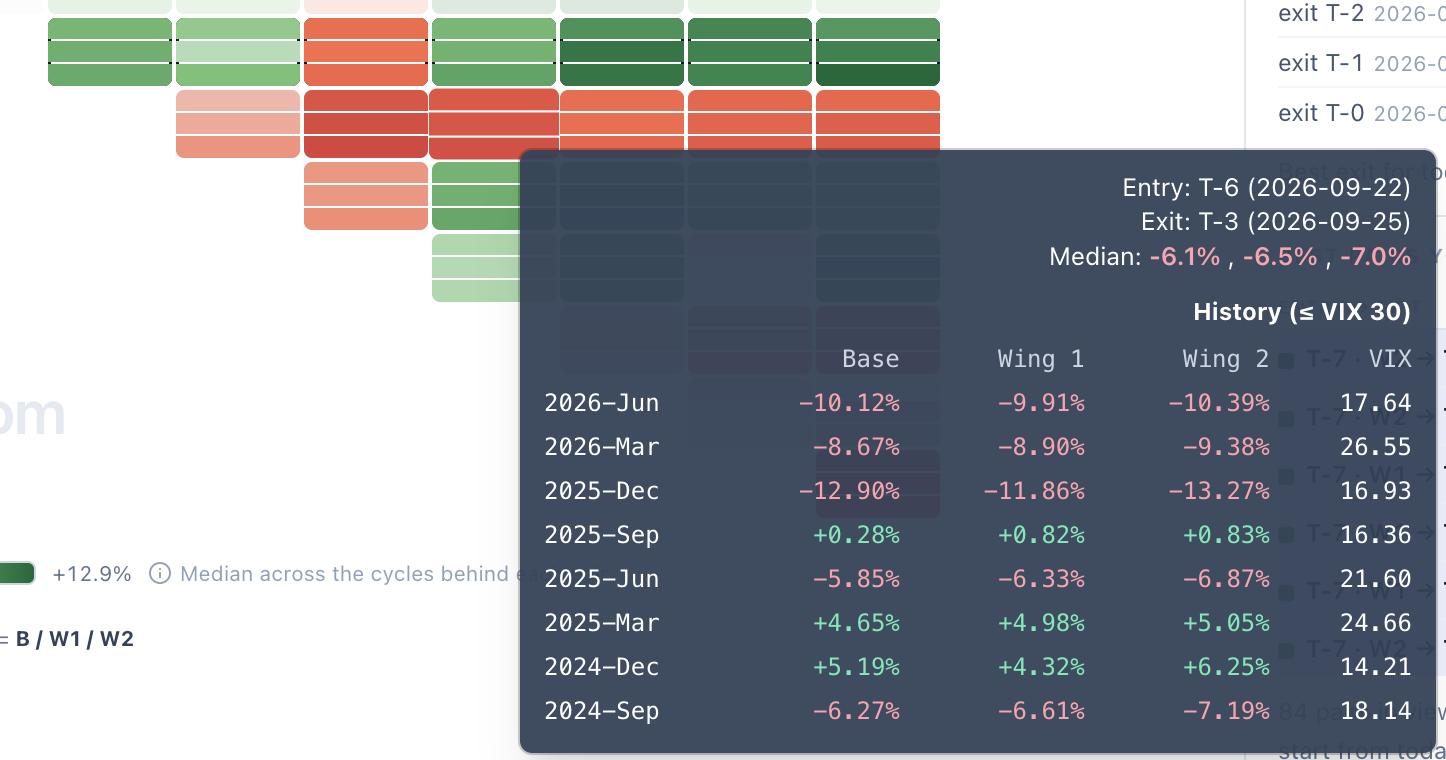
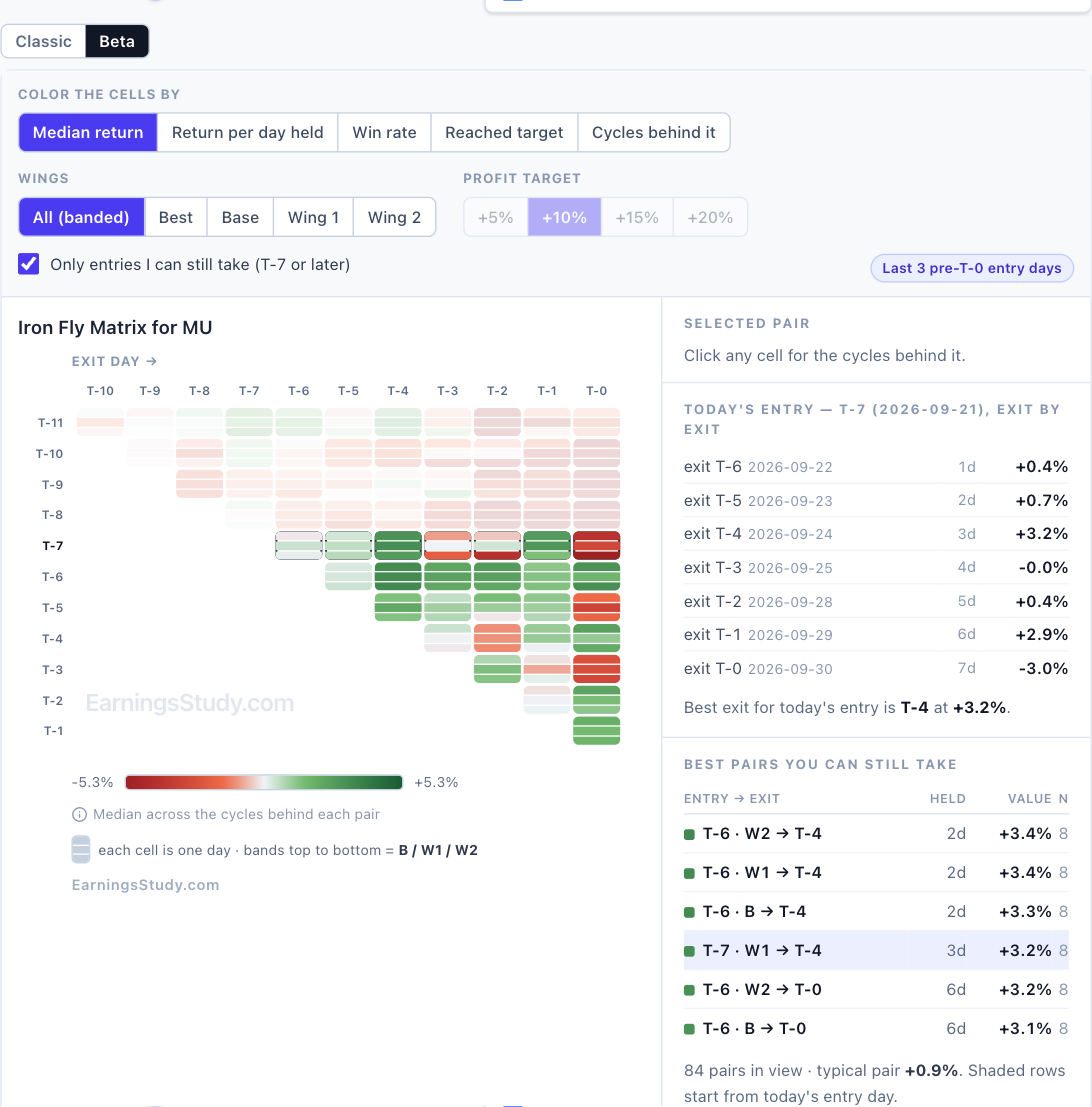
One grid, five questions — the new return matrix (Beta) The return matrix has always answered one question: what does the median cycle pay for every entry/exit pair? That is a good question. It is not the only one worth asking, and the same grid can answer the others without changing shape. The Beta matrix lets you change what the color means. Same entry × exit triangle, same history behind it, five different questions. It is live on every pre-earnings strategy page: Calendar, Straddle, Strangle, Iron Fly, Double Diagonal, Long Options, Call Debit Spread, etc., Screenshot 1 — MU straddle, colored by median return. Today’s entry, T-7, is the boxed row. The five questions Color the cells by The question it answers Median return What does a typical cycle pay? This is the Classic view. Return per day held Which pairs pay fastest? Median return divided by days held, so a two-day hold and a seven-day hold are compared on equal terms. Win rate How often did the pair finish positive at all? Reached target How many cycles reached +5%, +10%, +15% or +20% by that exit day? Cycles behind it How much history is each number actually built on? Reached target is the one I would look at first. Screenshot 2 — Same grid, now counting cycles that reached +10% by each exit day. On MU, a T-7 straddle reached +10% in 4 of 8 cycles by T-2 — and holding on to T-0 added no new ones. Those last two days bought more exposure, not more hits. The median view cannot tell you that; this one says it in a glance. The rows you can actually trade Half the triangle is entry days that have already passed. Only entries I can still take is on by default and fades them, so the ranking on the right lists only trades you can still put on today. It also makes the grid easier to read honestly. Look at the T-6 row in screenshot 1: one day later than today’s T-7 entry, the same straddle is red across the board. Every number opens up A median over eight cycles hides a lot. Hover any cell and you get every cycle behind it with the VIX that ruled it — gains in green, losses in red. Click it and the side panel pins the cycle list, with the actual calendar dates of your entry and exit. Screenshot 3 — Hover a cell: every cycle, its return and its VIX. Screenshot 4 — Click a cell: the side panel pins it, with real entry and exit dates. That is the honest read on MU’s best pair. T-7 → T-0 has a +11.9% median, but the individual cycles ran from −34.8% to +54.5%, and five of the eight were winners. A real edge with wide dispersion — size accordingly. Straddle vs Strangle, head to head Two matrices side by side ask you to subtract two colour scales in your head — and they were never on the same scale. In Beta, Compare with Strangle draws one grid instead: each cell is Straddle minus Strangle, teal where the straddle wins and amber where the strangle does. Click a cell for the cycle-by-cycle scorecard. Screenshot 5 — MU, T-4 → T-0: the strangle leads by 4.6 points (+8.8% against +4.2%) and won 6 of 8 cycles. The scorecard is the part two separate grids can never show. A small median edge that came from one lucky cycle looks identical to one that held up in six of eight — until you count them. It works the other way round from the Strangle page, and the wing selector lets you compare against a specific wing or the best one. Three wings, one row Strangle, Iron Fly and Double Diagonal each have three wings, which used to mean three rows per entry day and a matrix three times taller than the rest. Beta folds them into one row: each cell is split into three bands — Base, Wing 1 and Wing 2 from top to bottom. A third of the height, all three wings visible at once. Pick a single wing, or Best, and the numbers come back into the cells. Screenshot 6 — MU strangle: one row per entry day, one band per wing. Hover a banded cell and the three wings line up cycle by cycle: Screenshot 7 — MU strangle, T-6 → T-3: every wing lost in the same five cycles. When all three wings agree like that, the wing is not the problem — the timing is. Screenshot 8 — The same banded view on Iron Fly. Double Diagonal work the same way. How to turn it on Open any pre-earnings strategy page and load a symbol. Above the History Matrix, click Beta. Classic is one click away, and your choice is remembered. The VIX filter, earnings cycles and “3 days before current day” settings all carry over. It is labelled Beta because I want your feedback before it replaces anything. Tell me which view you end up using — and which question you wish the grid could answer that it cannot yet.
 3 points
 -
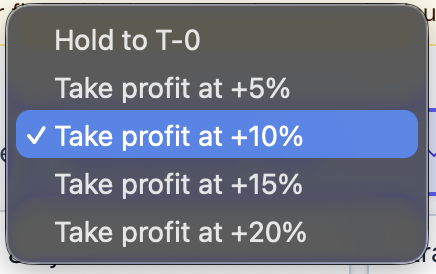
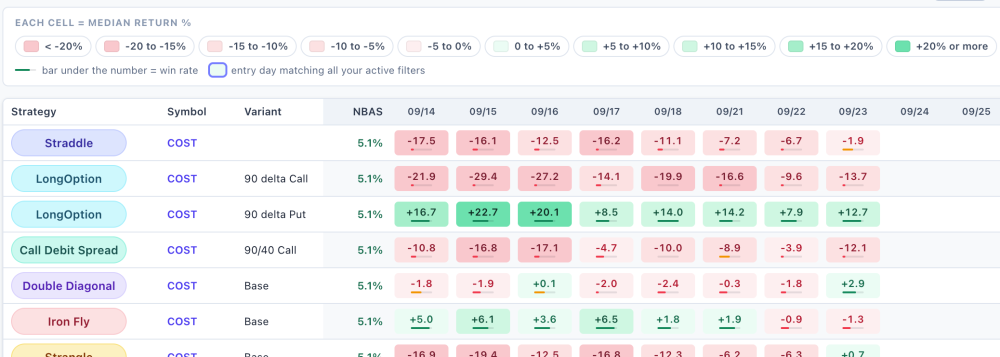
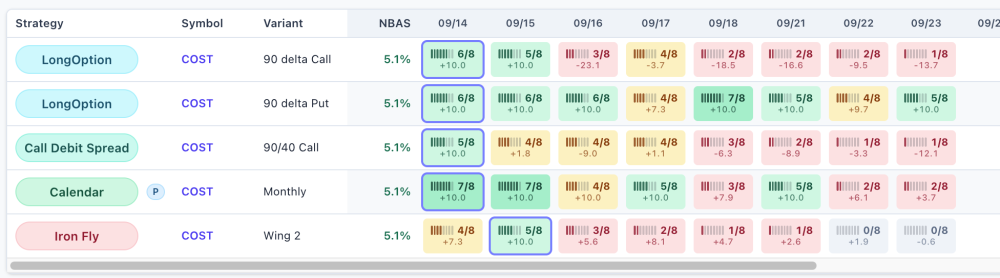
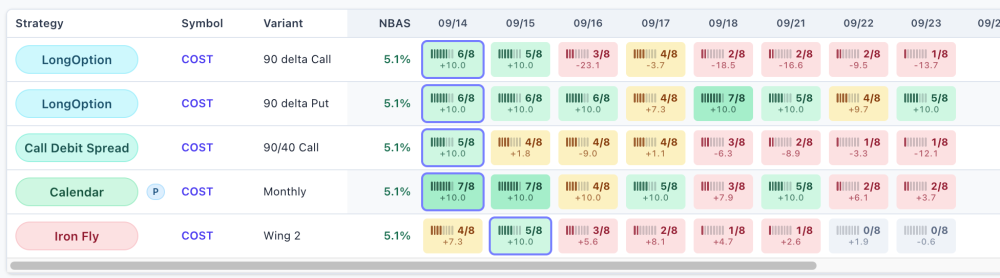
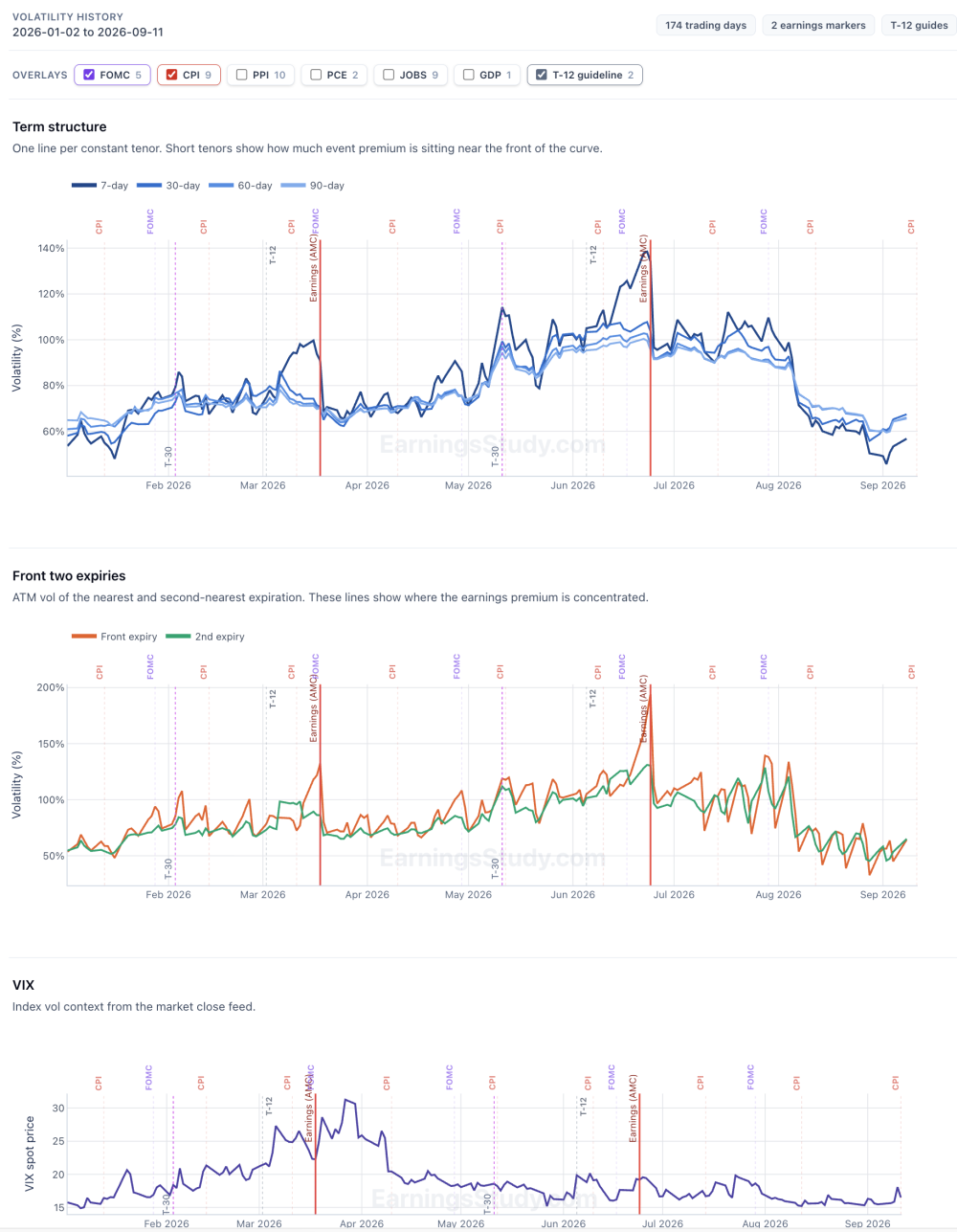
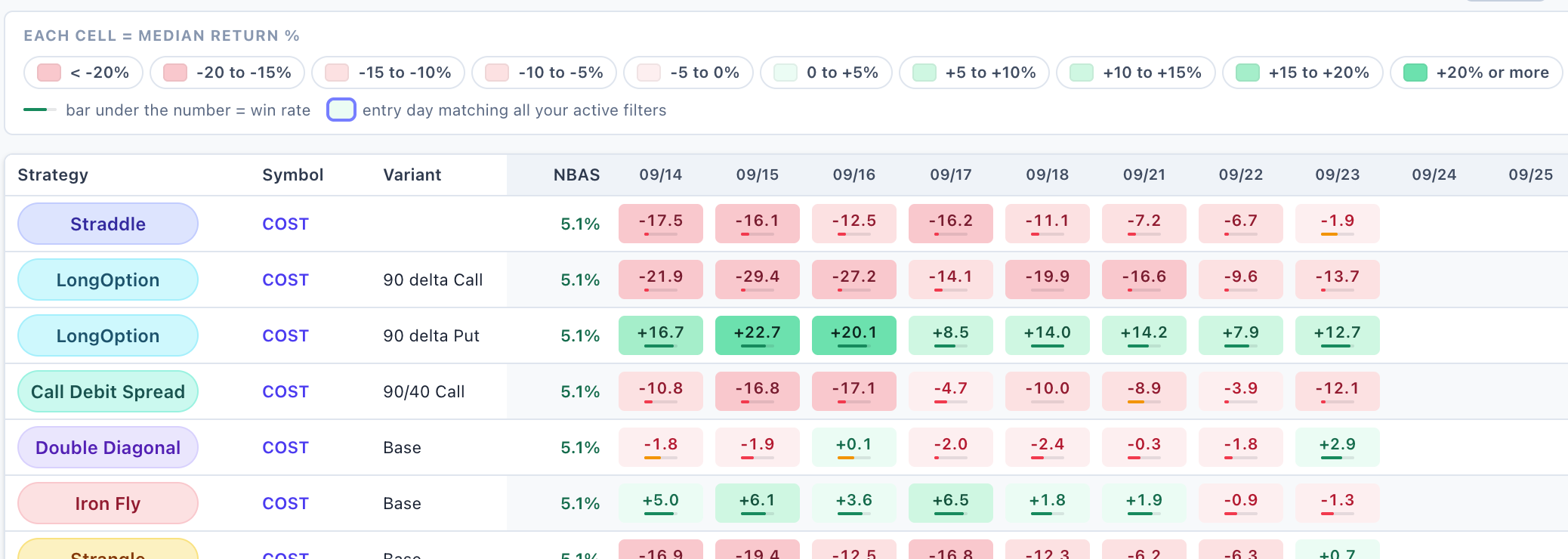
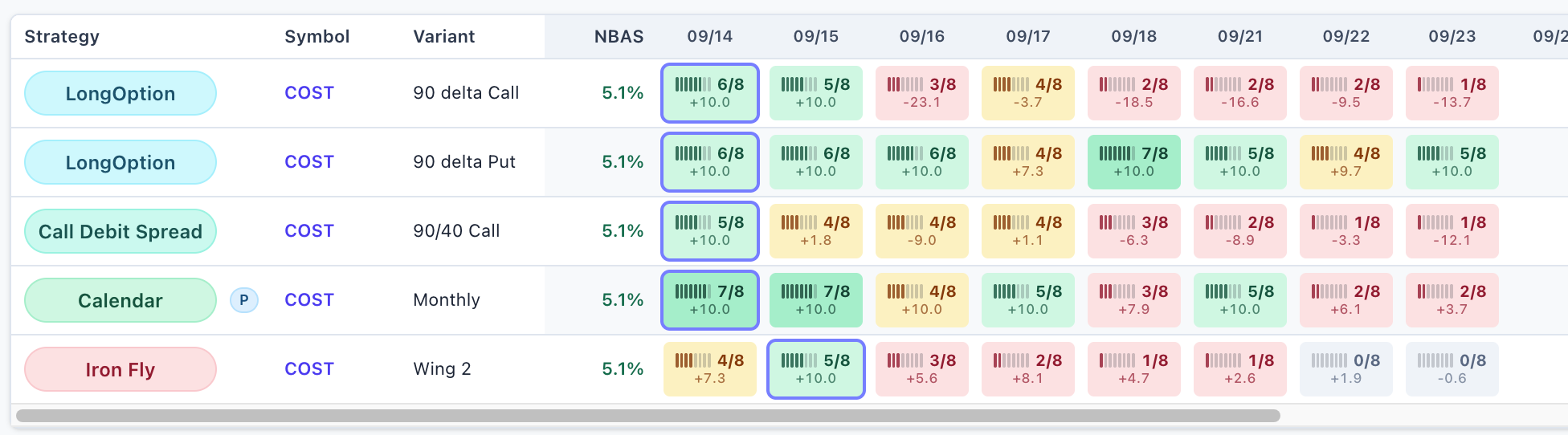
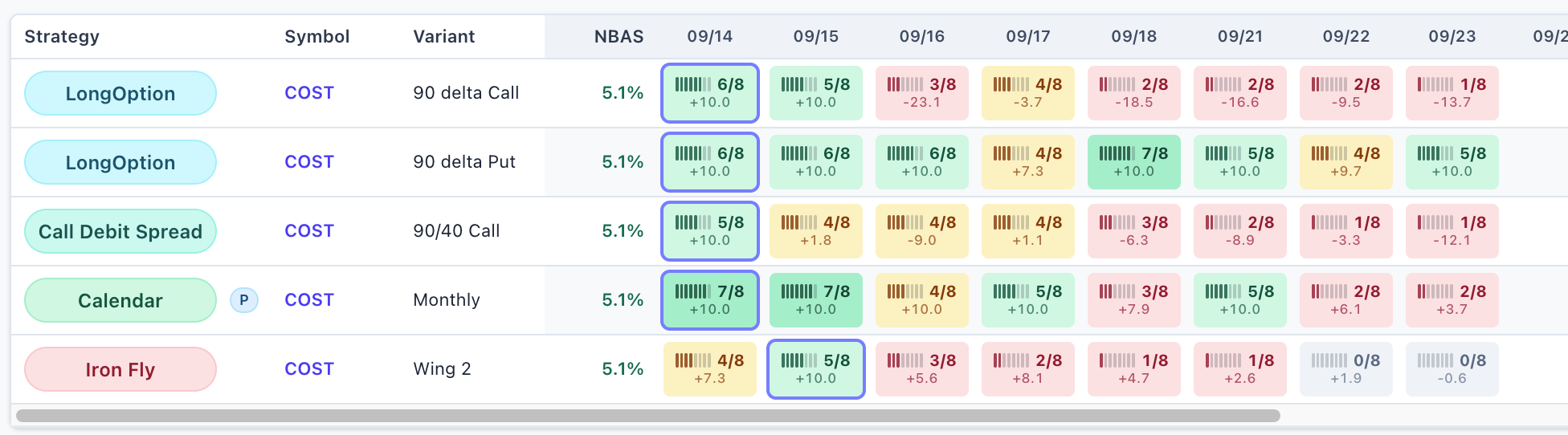
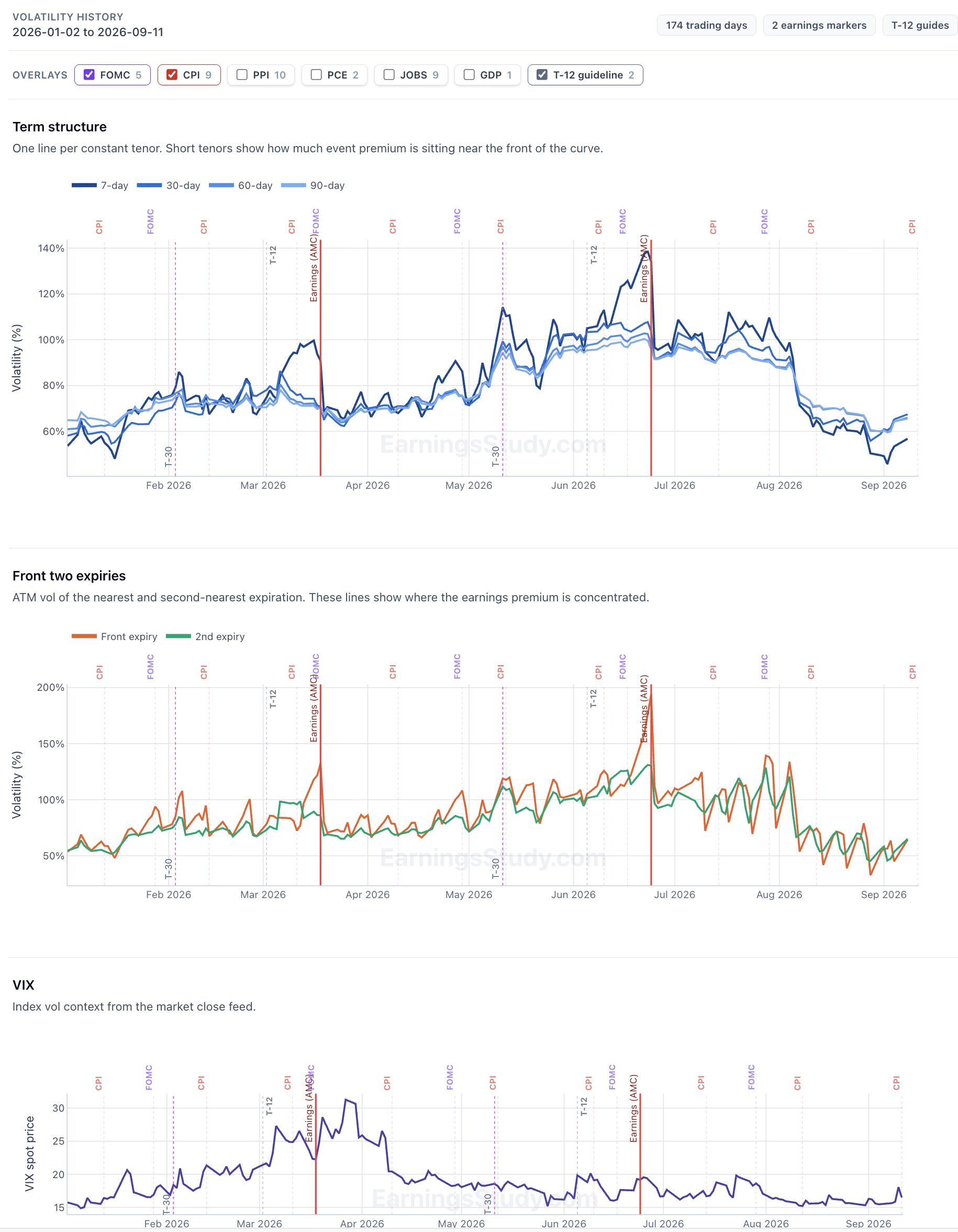
What's new: exit rules on the Daily Screener, and a look at the volatility term structure Two features shipped this week. They came out of the same complaint, which was mostly my own: the screener was very good at telling me when to get in and said almost nothing about when to get out, or about what volatility was doing while I waited. 1. The Daily Screener now understands exit rules Until now the screener answered exactly one question: if I enter on this date and hold to T-0, what did that return across the last N earnings cycles? That's a real question. It's also a strangely rigid one. It assumes you sit through the entire pre-earnings window no matter what the position does — that a trade up 30% at T-7 and a trade up half a percent at T-7 are the same trade, because you're holding both to the same day. Anyone who actually runs these knows that isn't how it goes. You take the money when it's there. So there's now an Exit rule control, and it's the first thing in the filter row. Hold to T-0 is the screener you already know. Take profit at +10% re-scores the whole board against a different plan: leave the moment the position is up 10%, and only hold to T-0 in the cycles where it never gets there. Every number on the page then answers the new question instead of the old one. That's the whole feature. What a cell tells you now With a target selected, each cell leads with how many past cycles reached it — one small block per cycle, filled where it hit — and the median return of that rule underneath. The block strip matters more than it looks, because it carries the sample size as well as the hit count, and the number of qualifying cycles isn't the same for every symbol. A newer listing might only have two or three on file. 2 of 2 and 8 of 8 are both perfect scores; only one of them is evidence, and now you can tell which without opening anything. Grey cells are their own answer: no cycle ever reached the target, so every cycle fell back to holding and the figure shown is just the hold-to-T-0 return. Not a target result at all. The example that convinced me This is COST, real board, last N cycles. Held to T-0, the 90-delta long call is a bloodbath across the first three entry days: −21.9%, −29.4%, −27.2%. On the old screener you'd skip it without a second thought, and you'd be right to. Switch the exit rule to +10% and the same three entry days read 6 of 8, 5 of 8, 3 of 8. The trade gets there. It just doesn't stay there. Held to the end it hands everything back and then some; taken at +10% it worked in six of the last eight cycles from that entry day. Click any cell for the receipts (Full details shows up on the right pane) [Subscribe to see more details] 2. Volatility term structure, through the pre-earnings window The second feature answers a different complaint: IV is up — is that my earnings, or is that the macro calendar? The volatility chart now plots the term structure across the run-up: the 7, 30, 60 and 90-day tenors together, plus the front and second expiry IV, from T-30 through to earnings. Seeing the tenors on one axis is the point. A front expiry pulling away from the back of the curve is the earnings premium building, and you can watch it happen day by day instead of inferring it from a single number. Flat separation means the premium isn't there yet. Macro events are marked on the same timeline — FOMC, CPI, PPI, PCE, jobs, GDP — which is what stops you misreading the chart. IV rising into your entry doesn't automatically mean the earnings premium is inflating; sometimes there's a CPI print sitting inside your holding window doing it instead. Those are two different trades and they deserve two different decisions. Where to find all this The profit-target view is now the default Daily Screener. Nothing is hidden — set the exit rule to Hold to T-0 and you have exactly the board you had last week, and the Classical View button next to the filters takes you back to the old layout entirely. There's also a Help button on the screener now that opens a full walkthrough in the side panel: how to read a cell, what the colors mean, and the win-rate-versus-hit-rate distinction above. Worth five minutes before you rely on the numbers. How I use it now Spread filter to the tightest bucket first — liquidity before edge, as always. Exit rule to +10%, Hit rate % to 60% or more. Scan for strong cells in the early columns. An entry day well before earnings gives the target room to get there. Open the cell and read the cycle list before committing to anything. If the hit rate rests on two cycles, I haven't found anything yet. As always: if there's a number you wish the screener showed, send me a message. That's how both of these got built. SO members on the ALL bundle: full core access to EarningsStudy is free through the partnership — just sign in at earningsstudy.com with your SO email. Everything above is historical and educational analysis, not a trade recommendation or financial advice. Options trading involves substantial risk. Historical figures are derived from end-of-day data and will differ from intraday markets and from your actual fills.

 3 points
 -
Not sure if it helps to community but Schwab and ThinkOrSwim seems to be experiencing outages of completely not letting users login nor do transactions once logged in (website seems to allow login). Seems to be consistent with DownDetector dot com reports...2 points
-
😂 Dave has broken nothing. Dave has found things — which is worse, because then I have to fix them. Three in one week. At this rate I'm putting him on the payroll or blocking his account, I haven't decided! Now I'm back, come on Dave, still waiting for your questions ...2 points
-
Two things from my side this weekend. A guide. I've written the document I wish every options tool came with: Reading OptionBench — 26 pages, one screen at a time, on what each number means, how it was computed, and where it stops being reliable. The two return conventions (observed exit vs target), why thin samples are greyed, how to read the entry × exit matrix, why a credit spread shows an expectation near zero at implied vol. Free, no account needed: https://optionbench.com/guide An article. When implied volatility hits its floor, does it come back up? — 6,600 episodes, 122 tickers, earnings controlled. The folklore is right: from a floor, IV rises within ten sessions 74% of the time against 57% from anywhere else, and the lower the start, the stronger the bounce. It also says why that isn't a strategy yet: https://optionbench.com/blog/implied-volatility-floor-mean-reversion The follow-up comes next: I tested the structures that are supposed to capture that rise — single leg, straddle, calendar, diagonal — one configuration each, declared before looking at the data, priced at the ask in and the bid out. The result isn't what the folklore says. It'll be published whichever way it reads. Questions and objections welcome, as always.1 point
-
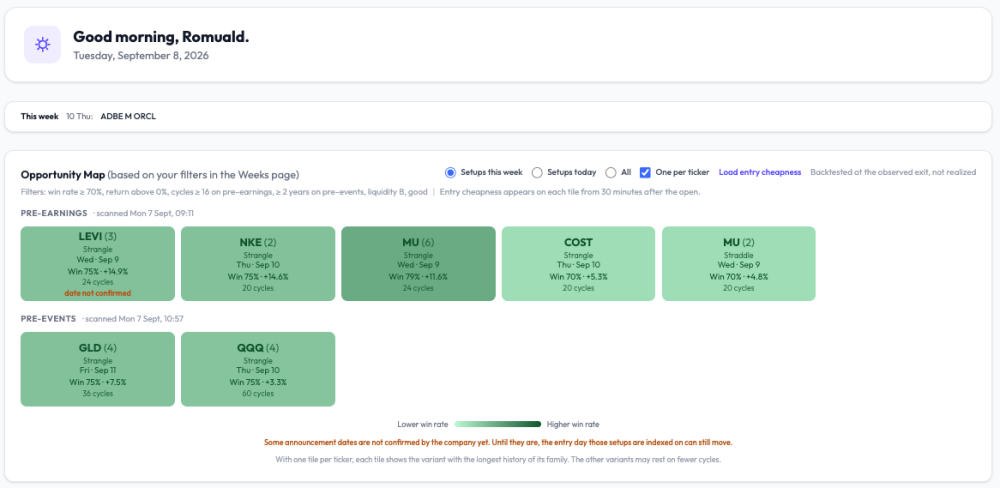
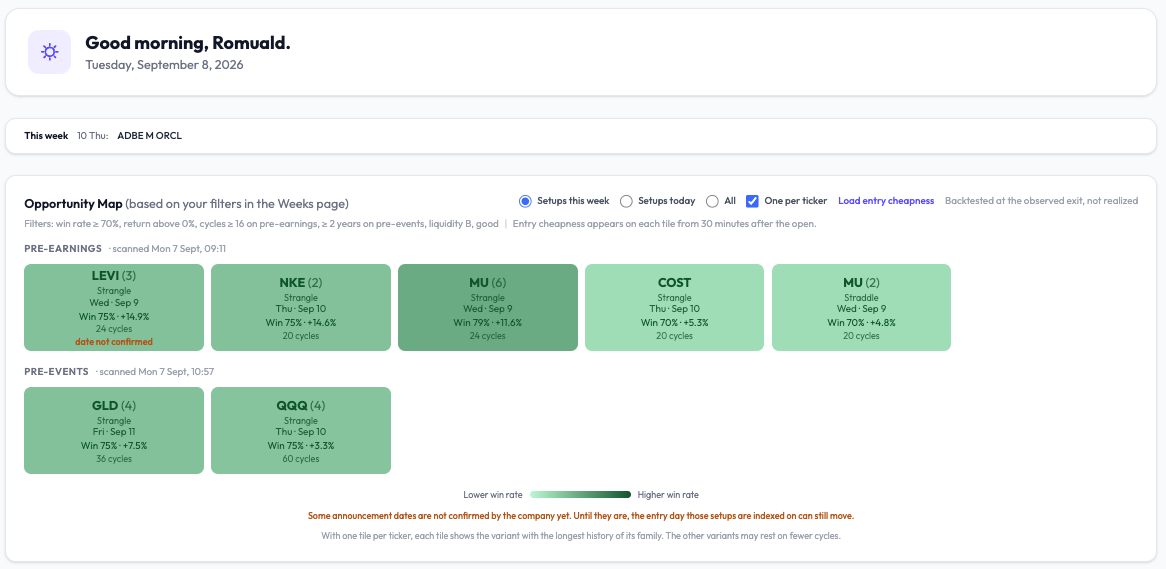
Added: unconfirmed earnings dates are now marked on the tile. Following a point raised here yesterday — a setup indexed on an announcement date the company has not yet confirmed now carries a marker, both on the Opportunity Map and in the scanner rows. LEVI is the current example. Its 30 September date is not confirmed, so the T-15 entry day the setup is indexed on can still move, and every T-x with it. The flag itself is not new — it comes from the data feed leaving the report-time field empty, which is what an unconfirmed date looks like there. What was missing was surfacing it where a setup is actually read. That is fixed. Two things worth saying about why this matters beyond the display. If a date moves by several days, every entry and exit day on that cycle points at the wrong event. That is the obvious half. The less obvious half: a backtest that enters at T-15 uses the announcement date we know now. If that date was only confirmed at T-9, the trader standing at T-15 did not have it. Every pre-earnings backtest that indexes on the final known date carries that, mine included. Marking the live case is straightforward; measuring the historical version needs a source that archives when each past date became confirmed, which I do not have.
 1 point
 -
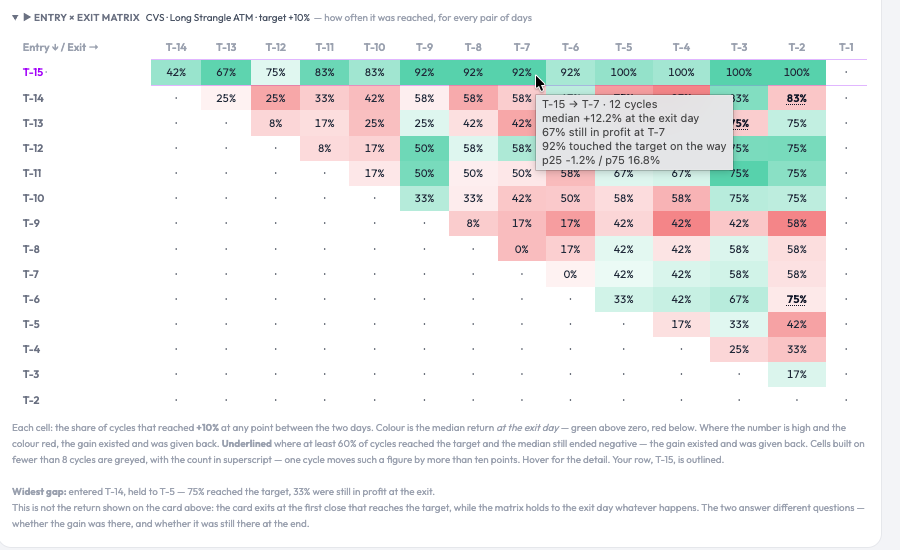
New in OptionBench: the entry × exit matrix Pre-earnings scanners tell you what a setup returned. They rarely tell you when the return was there. I've added a matrix to the pre-earnings detail view — entry day down the side, exit day across the top. Each cell shows how often the target was actually reached between those two days, with the colour carrying the median return at the exit. The two numbers diverge more than I expected. On a CVS strangle entered at T-15 and held to T-8, 92% of cycles touched +10% on the way and 67% still held a gain at the exit. On AAPL entered T-15 and held to T-3, it's 75% against 25% — three cycles out of four offered the gain, one in four kept it. That gap is the argument for a take-profit, and I hadn't seen it stated in one figure anywhere. It reverses on a Calendar Put: 46% still in profit at the exit against 25% that touched +20%. A short-vol position drifts up on theta rather than spiking, so it rarely overshoots. The reversal is what tells you the gap belongs to the structure rather than to the arithmetic — checked on AAPL, AMD, NVDA, MU and CRWD. Cells built on fewer than 8 cycles are greyed with the count in superscript. On seven cycles a percentage can only take eight values, and one cycle moves it by 14 points. It's live now on the pre-earnings scanner, https://app.optionbench.com/dashboard/pre-earnings-scanner, pre-events tomorrow. Happy to hear where it's wrong.
 1 point
 -
Enjoy your time away will try not to break anything while you are gone1 point




This leaderboard is set to New York/GMT-04:00